

If you’ve been diagnosed with cataracts, you’re likely focused on one big question:
Should you choose standard cataract surgery, or is investing in premium lenses worth it?
This is one of the most common conversations we have with cataract patients at Rudd Vision and for good reason. Modern cataract surgery is no longer just about removing cloudy vision. Today, it’s also an opportunity to design your vision around your lifestyle—how you read, work, drive, travel, and enjoy daily life—for decades to come.
Understanding the differences between standard and premium intraocular lenses (IOLs) and how different lens technologies support different lifestyle vision goals—can help you make a confident, informed decision.
Understanding Cataracts and Modern Cataract Surgery
At Rudd Vision, “Lifestyle Vision” means aligning your cataract surgery plan with how you actually use your eyes every day—not just how well you see on an eye chart. The lens technology selected is based on that lifestyle assessment, not the other way around.
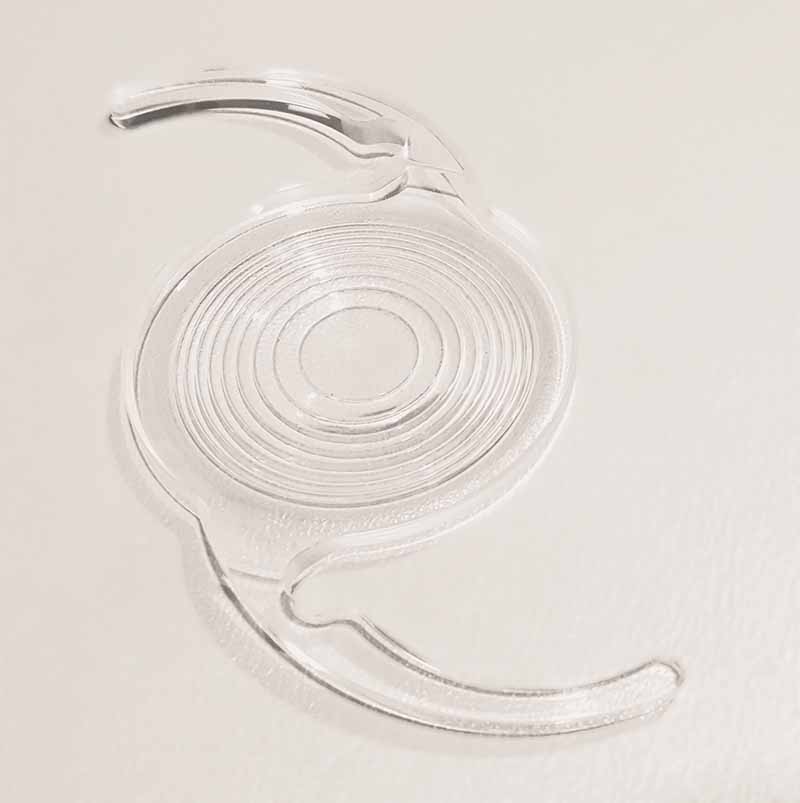
Cataracts develop as part of the natural aging process, when the eye’s natural lens becomes cloudy and begins to interfere with vision. Cataract surgery involves removing this clouded lens and replacing it with a clear artificial lens called an intraocular lens, or IOL.
Cataract surgery is one of the most successful procedures performed today, restoring vision for millions of people each year. Once surgery is medically necessary, insurance covers the removal of the cataract and implantation of a standard monofocal lens. However, many patients don’t realize they also have the option to upgrade their lens choice to better match their visual goals and lifestyle.
At Rudd Vision, we believe every patient deserves to understand how different cataract lens options translate into real-world lifestyle vision outcomes before making a decision.
Standard vs. Premium Cataract Lenses:
How Lifestyle Vision Options Differ
Standard Cataract Surgery (Insurance-Based Option)
Standard cataract surgery uses a monofocal IOL, which provides partial vision correction at one distance only, typically distance vision.
What standard lenses do:
- Correct nearsightedness or farsightedness
- Remove cloudy vision caused by cataracts
- Are covered by insurance when cataracts are medically indicated
What standard lenses do not do:
- Do not correct astigmatism
- Do not correct presbyopia (age-related near vision loss)
- Do not eliminate the need for bifocals or progressive glasses for best overall vision
For many patients, this option restores functional vision, but glasses remain a daily necessity.
Premium Options (Lifestyle Vision Options)
Premium cataract surgery offers lifestyle vision options designed around how you want to live and use your vision each day. These outcomes are achieved through advanced cataract lens technologies that allow for greater vision correction and customization, reducing dependence on glasses for many daily activities.
“I don’t think of cataract surgery in terms of ‘standard’ or ‘premium lenses,’” explains Dr. Rudd. “I think in terms of how a patient wants to live. The lens technology is simply the tool we use to support that lifestyle—whether that means reading without glasses, working comfortably on a computer, or enjoying daily life with less dependence on eyewear.”
At Rudd Vision, premium options fall into two main categories:
Maximum Independence From Glasses
Designed for patients who want to be glasses-free for most of the day (about 90–95%).
These options can correct:
- Nearsightedness
- Farsightedness
- Astigmatism
- Presbyopia
Lens technologies may include:
- Multifocal lenses
- Extended Depth of Focus (EDOF) lenses
- Light Adjustable Lenses™ (LAL)
At Rudd Vision, we customize the different lens options for each patient so they often achieve functional distance, intermediate, and near vision aligned with their lifestyle goals, with reduced reliance on glasses.
Advanced Vision Correction
This option improves vision at a single chosen distance (near or far), while also correcting astigmatism.
Common features:
- Toric lenses or laser astigmatism correction
- Minimal visual disturbances
- Glasses may still be needed for certain tasks
This option sits between standard surgery and maximum independence, offering enhanced clarity with fewer compromises.
Vision Quality: What Can You Expect?
All cataract surgery options improve contrast and brightness by removing the cloudy lens and include built-in UV protection. The differences lie in how many distances are corrected and what trade-offs may exist.
Premium Lifestyle Options involve:
- Improved functional vision at multiple distances
- Reduced dependence on glasses
- Possible nighttime visual effects (such as halos or starbursts)
- Slight reductions in contrast sensitivity in low-light conditions
These effects vary from person to person and are carefully discussed in the context of each patient’s lifestyle priorities and visual expectations. A key part of Dr. Rudd’s process is determining whether a patient’s expectations align with what each lens can realistically deliver.
Lifestyle Considerations: Beyond Visual Acuity
Choosing your cataract surgery options isn’t just about how clearly you read an eye chart – it’s about how you live your life.
Many patients value premium lenses for:
- Reading without glasses
- Using computers and devices more comfortably
- Driving, traveling, and exercising without constantly managing eyewear
- Reducing dependence on bifocals as they age
There’s also an important safety consideration. Multiple studies have shown that bifocal and progressive glasses are associated with an increased risk of falls in older adults.1,2,3 Reducing reliance on these lenses later in life may help support balance and mobility as patients age.
Cost Comparison: How Pricing Works
When cataract surgery is medically necessary, insurance (including Medicare) covers:
- Cataract removal
- Standard monofocal IOL
- Surgeon, facility, and anesthesia fees (with applicable deductibles and copays)
Premium lifestyle lens options involve an additional out-of-pocket fee, which varies based on the technology used and surgical approach.
At Rudd Vision:
- Advanced Vision Correction options typically range from 3,000 to $4,000 per eye
- Maximum Independence options typically range from $3,000–$5,000 per eye
- Financing options are available, including extended no-interest plans
Long-Term Value: Renting vs. Owning Your Vision
While premium lifestyle cataract surgery options require an upfront investment, many patients consider the long-term value.
Consider this:
- Quality glasses often cost $800–$1,000 or more per pair
- Over 20 years, glasses and prescription updates can easily total $5,000–$10,000
- Premium lenses are designed to last a lifetime, assuming continued eye health
Many patients view premium cataract surgery as owning their vision, rather than continually “renting” it through glasses and contacts.
Am I a Candidate for Premium Cataract Surgery?
Most patients are candidates for premium options, but candidacy depends on several factors, including:
- Corneal health and astigmatism regularity
- Retinal health (macular degeneration, diabetic retinopathy)
- Dry eye severity
- History of previous refractive surgery (LASIK, PRK, RK)
- Personal goals and expectations
Dr. Rudd performs detailed diagnostic testing and spends significant time understanding each patient’s lifestyle and expectations. One of the most important factors is what he calls the “expectation gap.” If expectations exceed what a lens can reasonably deliver, a different option may be recommended—even if the eyes are technically suitable.
Questions to Ask at Your Cataract Consultation
- Which lifestyle vision option fits my lifestyle and vision goals best?
- How often might I still need glasses with each option?
- What visual side effects should I be aware of?
- How does my eye health affect which lenses are recommended for me?
- What should I expect in the years after surgery as my vision needs change?
A Collaborative Decision—Not a Sales Pitch
Choosing a cataract lens is not a one-size-fits-all decision. It’s a collaborative process between you and your surgeon, based on your eye health, visual needs, and comfort with trade-offs.
Dr. Rudd provides a clear recommendation, but the final decision is always yours. In rare cases, lenses can even be exchanged if a patient is unhappy with their outcome.
So—Is the Investment Worth It?
For patients who value visual independence, convenience, and long-term quality of life, premium surgery is often worth the investment. For others, standard cataract surgery may be the right fit.
The most important step is having an informed conversation with a surgeon who takes the time to understand your goals and helps you choose the option that best supports how you want to see and live.
If you’re considering cataract surgery and want to explore your options, the team at Rudd Vision is here to guide you every step of the way. Contact us to schedule a consultation.
Sources
1 Johnson L, Buckley JG, Scally AJ, Elliott DB. Multifocal spectacles increase variability in toe clearance and risk of tripping in the elderly. Invest Ophthalmol Vis Sci. 2007 Apr;48(4):1466-71. doi: 10.1167/iovs.06-0586. PMID: 17389472. Available: https://pubmed.ncbi.nlm.nih.gov/17389472/. Accessed January 15, 2026.
2 Menant JC, St George RJ, Sandery B, Fitzpatrick RC, Lord SR. Older people contact more obstacles when wearing multifocal glasses and performing a secondary visual task. J Am Geriatr Soc. 2009 Oct;57(10):1833-8. doi: 10.1111/j.1532-5415.2009.02436.x. Epub 2009 Aug 18. PMID: 19694864. Available: https://pubmed.ncbi.nlm.nih.gov/19694864/. Accessed January 16, 2026.
3 Lord SR, Ivers R, Cameron ID, Lee BB, Haran M. Fall rates in bifocal, trifocal, and progressive addition lens glasses wearers. Optom Vis Sci. 2025 Feb 1;102(2):106-109. doi: 10.1097/OPX.0000000000002218. Epub 2025 Jan 30. PMID: 39882858. Available: https://pubmed.ncbi.nlm.nih.gov/39882858/. Accessed January 15, 2026.
 Call
Call
 Book
Book
 Quiz
Quiz
 Location